
An enterprise security platform's product page wasn't converting trial form visitors effectively. Through strategic form placement and streamlined user paths, we helped them achieve significant improvements in both trial signups and revenue per user. See how thoughtful conversion optimization transformed their results while maintaining the detailed product information B2B buyers need
Highlights
As part of our ITERATE AB testing program, we conducted comprehensive research and analysis for a leading enterprise software company. Our prioritization process identified a significant opportunity: one of their key product pages was underperforming in visitor conversions. While their software solution was a market leader in its category, the digital experience wasn’t matching their strong market position.
Form-placement testing on enterprise SaaS routinely produces 25%+ form-submission lifts - 27.8% here. The kind of test discipline a top-tier conversion rate optimization agency brings to a structured CRO program.
Here’s how we transformed their product page into a conversion engine, driving a 27.8% increase in form submissions with high statistical confidence.
The Challenge 💡
The data showed that visitors weren’t engaging with the trial form effectively. Despite offering an industry-leading vulnerability scanning solution, the page structure wasn’t optimized for conversion. Our analysis revealed several key issues hampering performance. The form placement failed to align with natural user decision points in the journey, while the complex page layout introduced unnecessary friction in the trial signup process. Additionally, multiple competing calls-to-action throughout the page reduced the trial form’s visibility and impact.
Our Solution ⚡
We implemented a data-driven redesign focused on streamlining the user experience and improving form accessibility. Our solution centered on strategic form placement and interface simplification.
Key implementation elements:
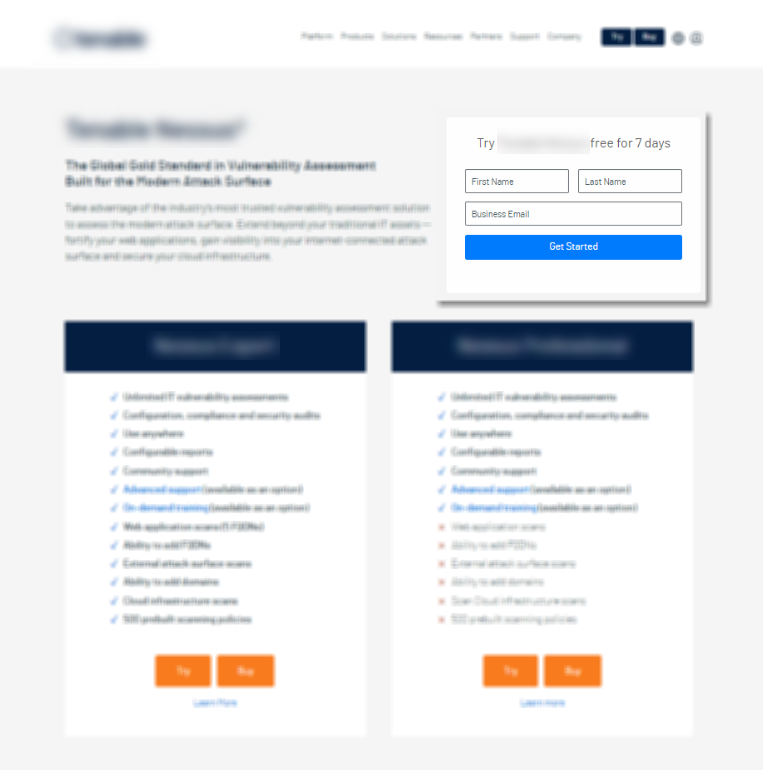
- Relocated trial form to prime header position
- Streamlined call-to-action hierarchy
- Simplified bottom-of-page elements
- Enhanced form visibility while maintaining complete product information
Technical Implementation
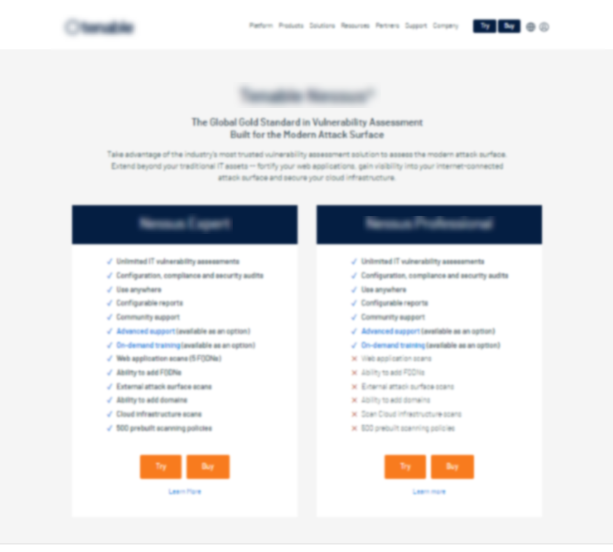
We moved the form up above the fold:
The Results 📈
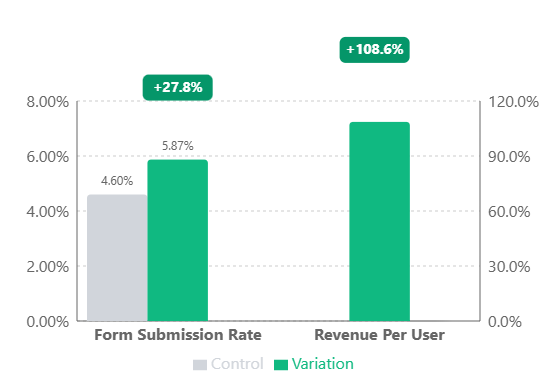
Our AB test delivered impressive results across all key metrics. The changes showed strong statistical confidence while generating significant impact in both conversion rates and revenue. Most importantly, we achieved these improvements while maintaining the detailed product information essential for enterprise purchasing decisions.
Form Submission Results:
| Metric | Control | Variation | Lift |
|---|---|---|---|
| Users | 6,398 | 6,250 | - |
| Form Submissions | 294 | 367 | - |
| Conversion Rate | 4.60% | 5.87% | 27.8% |
| Conservative Lift Estimate | - | - | 21.0% |
| Statistical Confidence | - | - | 99% |
Revenue Impact:
| Metric | Value |
|---|---|
| Lift Revenue | +188% |
| Revenue per User | +108.6% |
| Conservative RPU Lift | +42.7% |
| Statistical Confidence | 91% |
Why It Worked
The test results demonstrate the impact of strategic form placement and simplified user paths on conversion rates. Moving the form to a prominent header position significantly increased engagement, while reducing competing calls-to-action helped streamline the conversion process. The approach balanced lead generation optimization with maintaining access to detailed product information. This proved particularly effective in a technical B2B context, where prospects need comprehensive information during their evaluation process. The lift in both trial signups and revenue validates the conversion optimization approach. A 4.60% base is healthy for an enterprise SaaS trial form, which makes the jump to 5.87% more about removing friction than fixing a broken page - our typical B2B SaaS conversion rates show where trial and demo forms tend to land.
Let’s Talk 💬
Want to see similar conversion rate improvements for your enterprise software pages? Let’s discuss how our data-driven approach can transform your digital presence.
Appendix: Detailed Test Parameters
Test Configuration:
| Parameter | Value |
|---|---|
| Test Duration | 20 days |
| Device Targeting | All devices |
| Browser Targeting | All modern browsers |
| Primary Metric | Form Submissions |
| Statistical Confidence | 99% |
Frequently Asked Questions
How much can form placement alone affect B2B SaaS trial signups?
Significantly. For an enterprise cybersecurity SaaS, repositioning and simplifying the trial form on their product page increased form submissions by 27.8% and revenue per user by 108.6%. Form placement is one of the highest-leverage changes for B2B SaaS because the form IS the conversion event.
Do B2B buyers behave differently than B2C in A/B tests?
Yes. B2B traffic is typically lower volume, longer consideration, and has more decision-makers involved. Tests need longer run times to reach significance, and the metric chain is longer (form submission to SQL to opportunity to close). This test focused on the first step (form submission) because it’s measurable in-session, but the 108.6% revenue per user lift suggests the upstream changes translated through the full funnel.
Should SaaS companies test form placement above or below the fold?
Our test didn’t find a universal answer - the right position depends on the product page’s narrative. For this enterprise security product, the above-fold placement worked because buyers were ready to act quickly; for more complex B2B products, below-fold placement after feature education may convert higher quality leads. Always test against your own traffic.
What’s the biggest form optimization mistake SaaS companies make?
Asking too much too early. Enterprise SaaS forms often ask for company size, role, use case, and timeline in the initial form, then wonder why conversion is low. Our test simplified the form to the minimum required fields and moved qualification questions to a follow-up step. This is consistent with what we see across enterprise SaaS CRO engagements.
How does this compare to typical SaaS trial signup optimization results?
27.8% lift on form submissions is on the higher end for a single placement test in enterprise SaaS. Most form optimization tests yield 5-15% lifts. The magnitude here suggests the original placement was significantly suboptimal - a reminder that baseline quality matters as much as optimization sophistication.