
Client Background
Our client is a leading e-commerce retailer in the jewelry sector, offering a diverse catalog that ranges from intricately designed necklaces to high-quality loose gemstones. Catering to a varied consumer base with different preferences and spending capacities, the platform attracts over 100,000 daily users and is based in the United States.
The Challenge
The client wanted to foster a culture of testing and brought us on to run their A/B testing program. Their objectives were to improve user experience, validate upcoming site changes, and test new conversion-increasing concepts across the full funnel.
Objectives
With a long list of site enhancements in flight, the client wanted to make sure each one was net positive from a conversion perspective before shipping. The overarching goal was to lift revenue per user across the entire catalog.
Our Solution
The engagement started with a comprehensive Hitlist CRO Audit, a 60-90 page document offering specific, actionable recommendations for conversion rate optimization. The audit followed a structured methodology that encompassed an analytics audit, user testing, heatmaps, and session recordings. The user testing phase was instrumental in understanding user behavior and preferences, with scenario-based tasks run on both the client's and a competitor's site.
After the audit, the engagement transitioned into the Iterate A/B Testing Program, run in consecutive 90-day sprints. This ongoing initiative involved continuous testing of website elements to determine which versions converted better and to build a backlog of validated wins.
A/B Testing Program Highlights
Across the engagement, we ran A/B tests in the following areas:
- Product detail pages
- Mini cart and cart page
- Category portal pages
- Site navigation
- Checkout flow
- Airing now (live shopping) experience
- Mobile navigation
- Homepage messaging and layout
The three featured tests below illustrate the range and depth of the program. The program's full results, including all winning and losing tests, are summarized at the end.
Background
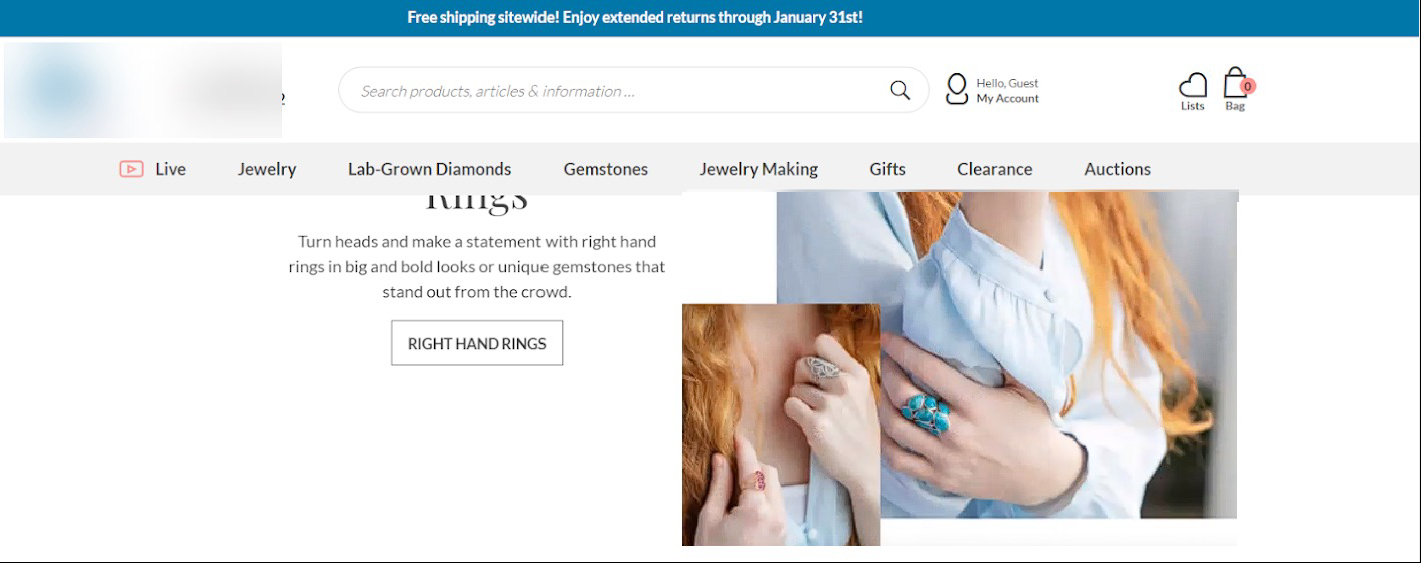
Top-level category 'portal' pages are common destinations for both paid and organic traffic but often suffer from lower conversion rates for users already on the site.
Hypothesis
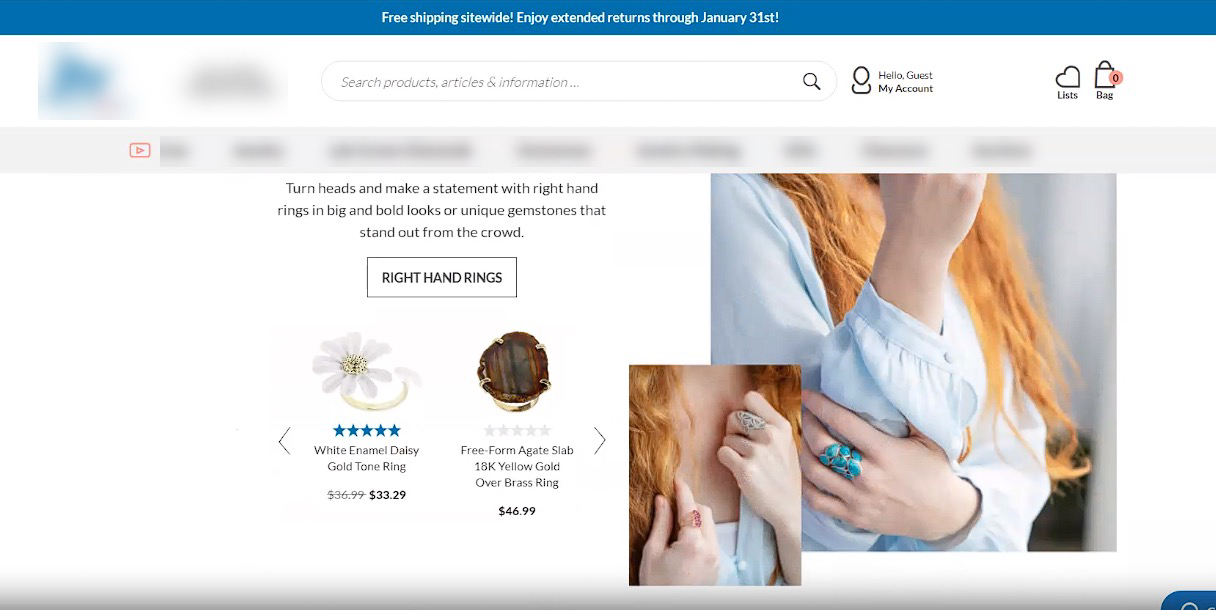
Featuring top products for each section on the portal page would enhance conversion rates for both internal and entry users.
Methodology
The test involved adding top products for each section on the portal page.
Results
The test was successful, resulting in a 36% increase in revenue per user and a 5.2% increase in transaction conversion rate at a 97% confidence level. It was particularly strong for organic users, up 34.8% at 99% confidence.
Background
Warranty upsells are commonly tested in add-to-cart modals, carts, and sometimes checkout flows to increase average order value (AOV).
Hypothesis
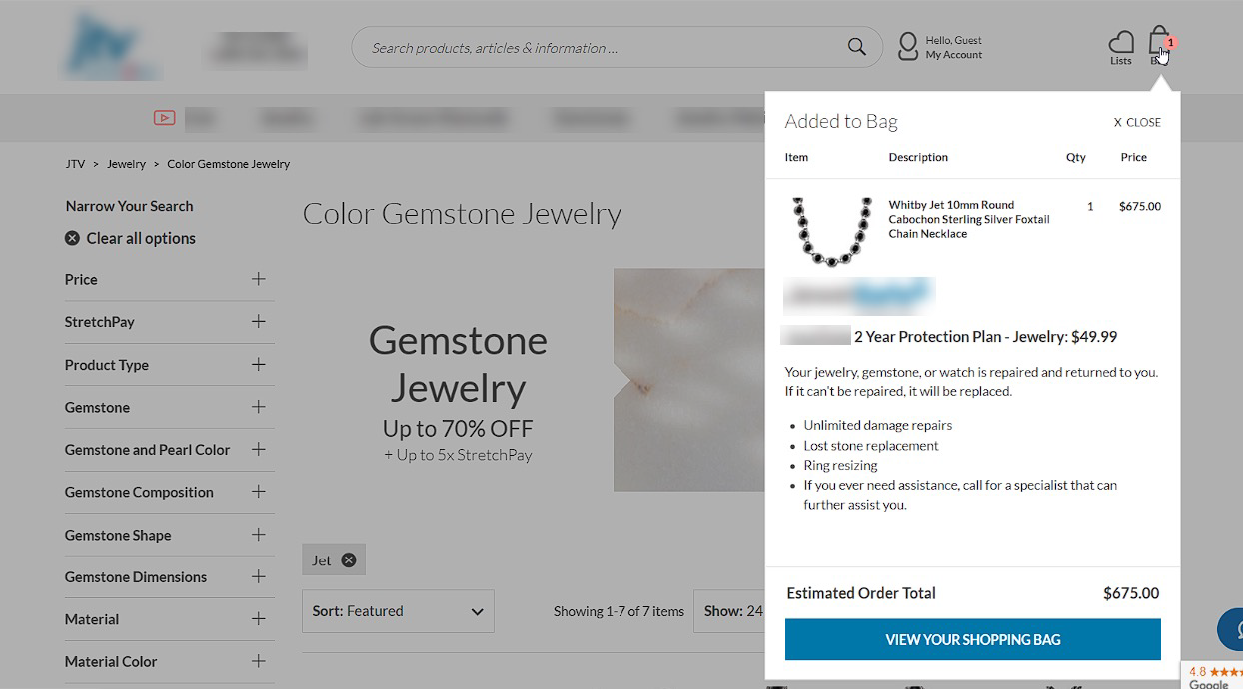
Adding a warranty upsell would increase both revenue per user and conversion rate.
Methodology
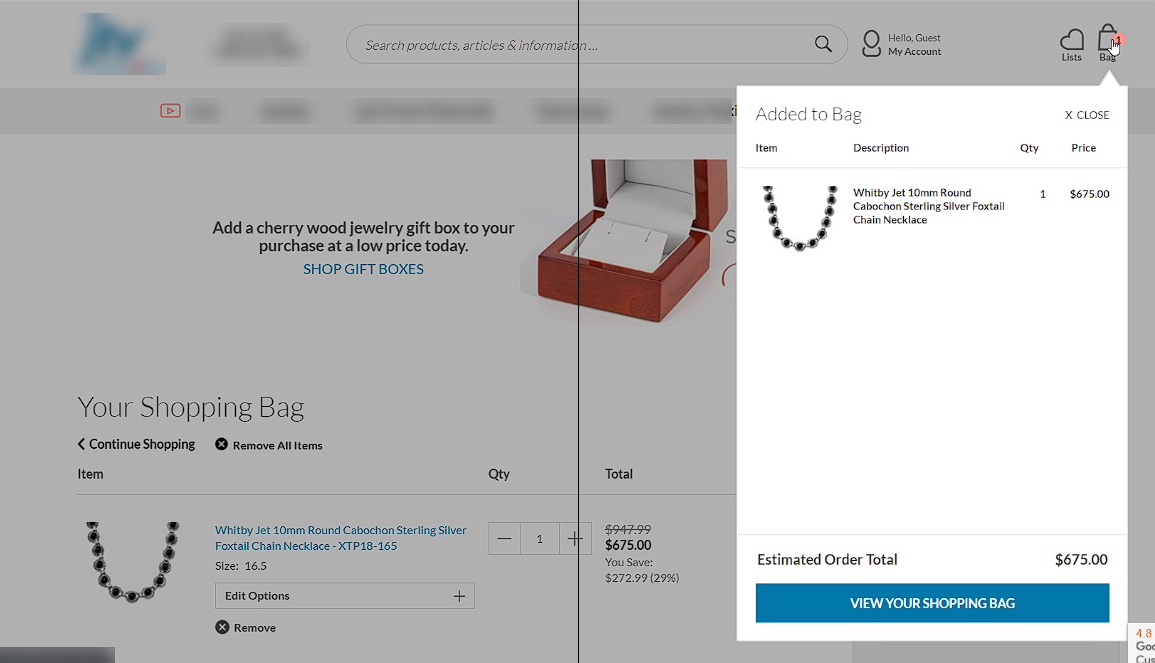
The test involved adding a warranty upsell option in the mini cart.
Results
The test was successful, resulting in an 8% increase in revenue per user, which was the primary KPI for this type of upsell test. We also observed a 2.6% increase in conversion rate at a 97% confidence level and an 11% increase in revenue per user for returning users.
Background
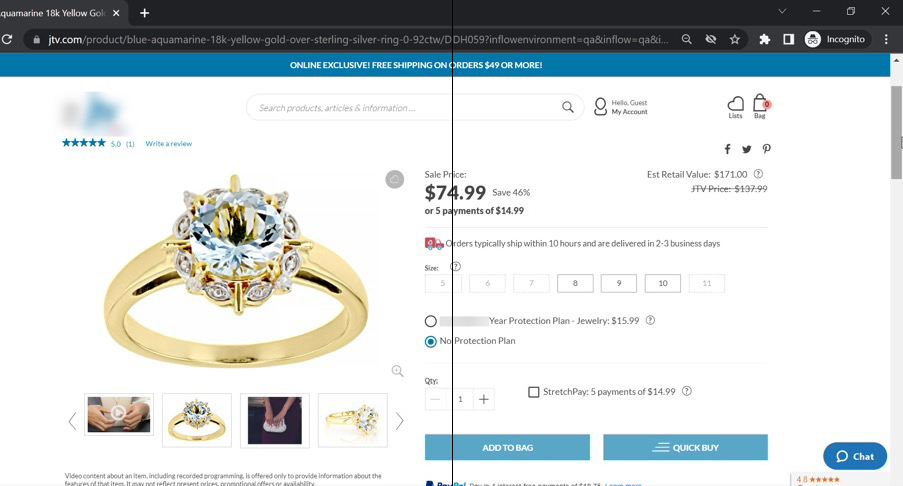
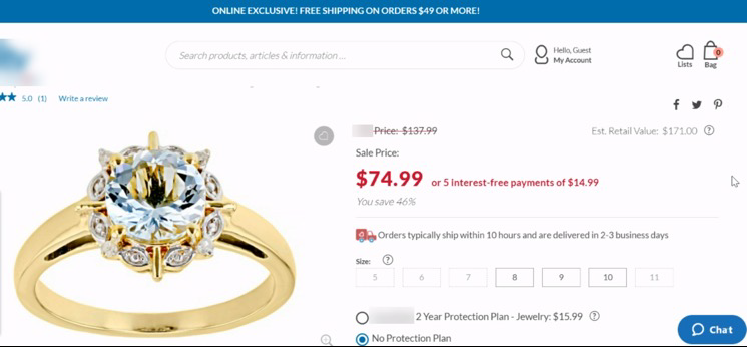
Based on user testing, competitive analysis, and best practices, a redesign of the pricing area was deemed necessary to highlight potential savings and buy-over-time options.
Hypothesis
A redesigned pricing area highlighting savings would improve the conversion rate.
Methodology
The test involved redesigning the pricing area to emphasize savings and buy-over-time availability.
Results
The test was successful, resulting in a 4.8% increase in conversion at a 99% confidence level. It was particularly strong for new users, up 7.2% for conversion and 12% for revenue per user.
Program Results
This was a multi-year CRO engagement, delivered as consecutive 90-day testing sprints. The audit identified the priority opportunities; each sprint of the Iterate A/B Testing Program then validated and shipped wins across every part of the funnel.
The program ran tests continuously and achieved a 76% win rate. According to the program tracking document, we delivered a 24% measured test conversion rate lift, a 7% conservative lift, and an estimated 13% real-world lift, which translates to over $14 million in incremental site revenue. The biggest wins skewed hard by segment too, with organic entry users up 34.8% and new users up 7.2% on the price box, and our conversion rate by channel and visitor type breakdown shows why those cuts move so differently from the blended average.
The partnership lasted over 4 years and ended when the client took their AB testing program internal — a typical outcome for larger enterprises once they see the program's effectiveness and want to build the capability in-house.
Our work with this client is a great example of how to jump-start a testing culture inside an organization and shift UX and UI decision-making from aesthetic preference to data-driven, ROI-focused practice.
"ConversionTeam has been a great long-term partner. They have brought new insights, helped validate our own ideas, and provided turnkey A/B testing resources. ConversionTeam's mix of technical proficiency and dedication to client service makes them the perfect complement to our UI/UX practice."
Frequently Asked Questions
What is an engagement-level CRO case study?
What was tested in this jewelry eCommerce CRO engagement?
Which test had the biggest impact?
How long did this CRO engagement run?
How do 90-day sprints and the 30% lift guarantee work?
What's the difference between measured, conservative, and real-world lift?
How does ConversionTeam decide what to test?
Luxury retailers often ask me if our tactics work on luxury, or if they're just low-consideration purchases. My response is always the same: the psychological principles that make users convert, like social proof and scarcity, work regardless of the cost of the item.